
Explore the rise of vibe coding in API platforms, its impact on APIs, developer workflows, and the future of DevRel.
The landscape of software engineering is undergoing a seismic shift, moving away from the rigid, syntax-heavy era into a more fluid, intent-based methodology. This transformation is best captured by the term “vibe coding.” As we look at the trajectory of modern software, vibe coding in API platforms is emerging as the primary driver of how developers interact with third-party services. No longer is the developer experience solely about the quality of the documentation; it is about how quickly an idea can be manifested into a working prototype using AI-driven tools. This shift is fundamentally altering the relationship between API providers and their users, forcing a total rethink of Developer Relations (DevRel) strategies.
What Is Vibe Coding? (Vibe Coding Meaning Explained)
To understand where we are headed, we must first define the concept. The vibe coding meaning refers to a style of development where the programmer acts more like an architect or a “vibe curator” rather than a manual typist of code. In this paradigm, developers use high-level natural language prompts and AI-assisted tools—like Cursor, Replit Agent, or GitHub Copilot—to describe the intent of what they want to build.
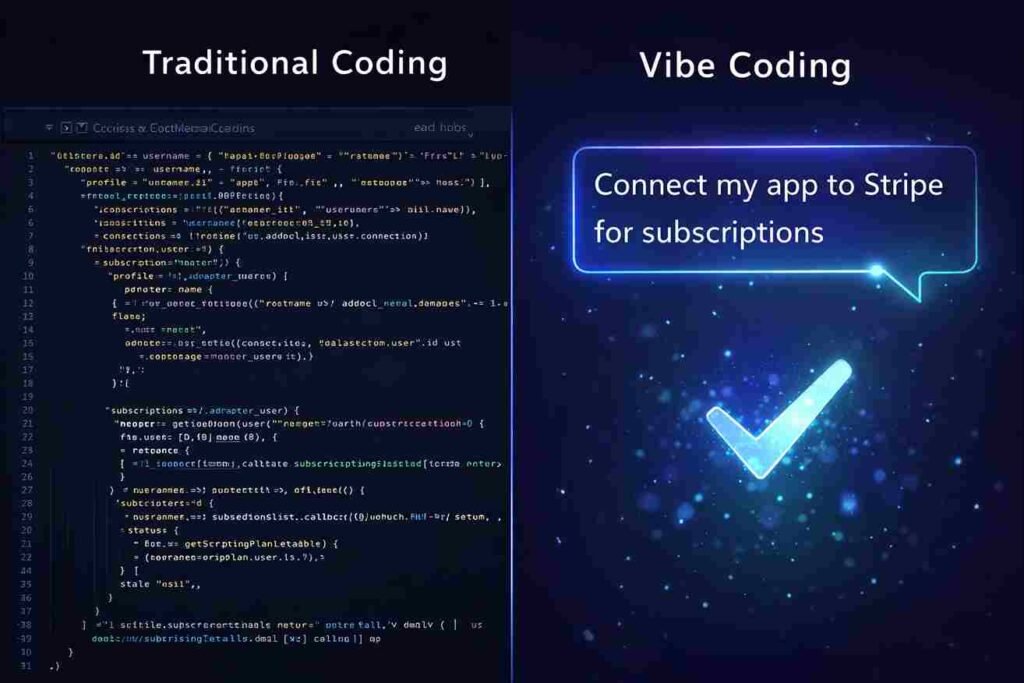
in a traditional setting, a developer would spend hours reading API references, debugging authentication headers, and ensuring data types match. In a vibe coding environment, the developer might simply say, “Connect my checkout page to the Stripe API and send a confirmation Slack message when a payment succeeds.” The AI handles the “how,” while the developer focuses on the “what.” It is a shift from syntactic precision to semantic intent. This doesn’t mean the code doesn’t matter; it means the barrier to entry has shifted from memorizing syntax to mastering the flow and logic of an application.
How Vibe Coding Is Transforming API Platforms
The rise of this movement is forcing API providers to evolve. Vibe coding in API platforms demands a different kind of infrastructure. When an AI is the one “writing” the integration code, the API must be structured to be “AI-legible” just as much as it is “human-readable.”
1. Developer-First Design
Modern API development is moving toward a developer-first (and AI-first) design. This means creating APIs with consistent naming conventions, predictable error codes, and robust schemas. If an AI can easily predict the next logical endpoint in a sequence, the “vibe” remains intact. If the API is clunky or inconsistent, the AI hallucinations increase, the code breaks, and the developer’s flow is interrupted.
2. AI-Assisted Workflows
API platforms are now integrating AI assistants directly into their dashboards. Instead of searching through a 50-page PDF of documentation, developers use a chat interface to generate a personalized integration snippet. This immediate gratification is the hallmark of the vibe coding era.
3. Faster Experimentation and Prototyping
The time it takes to go from “Hello World” to a functional MVP has shrunk from days to minutes. Because vibe coding allows for rapid iteration, API platforms are seeing a surge in “throwaway” prototypes. Developers are testing more APIs than ever before because the cost of integration (in terms of time and effort) has plummeted.
Vibe Coding and the Future of API Platforms
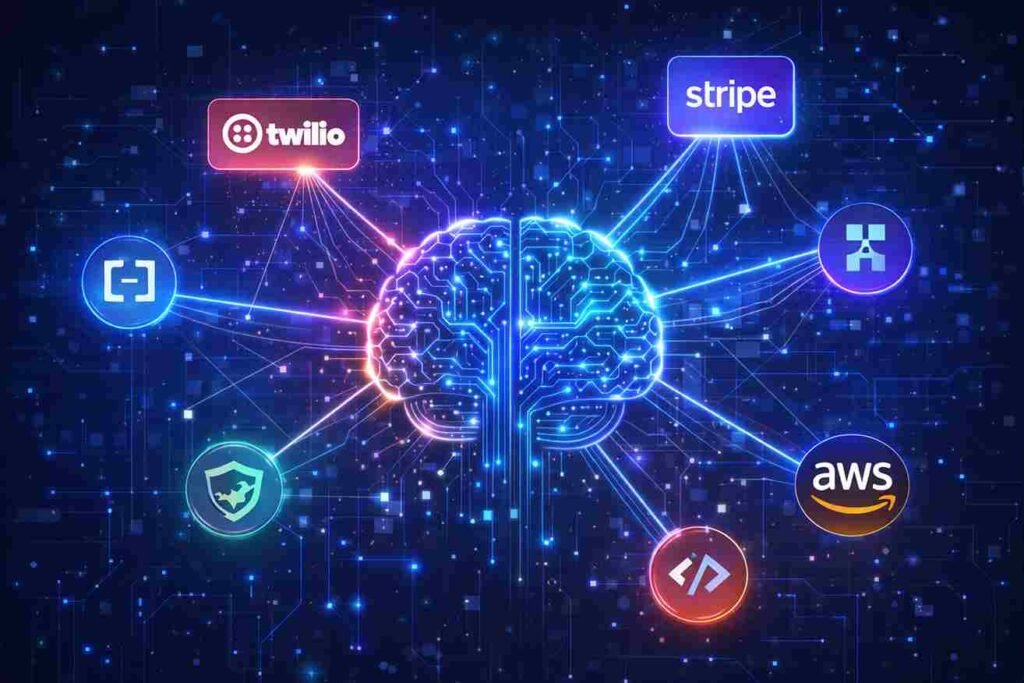
As we look toward the future of API platforms, the trend is clear: we are moving toward a world of “headless” integrations. In the near future, APIs will not just be sets of endpoints; they will be autonomous services that can negotiate with one another.
AI-Driven Development and Autonomy
AI-driven development will eventually lead to APIs that come with their own “LLM-optimized” context files. Imagine downloading a .prompt-context file alongside your API key that tells your AI agent exactly how to handle rate limits, pagination, and edge cases for that specific platform.
The Convergence of No-Code/Low-Code and APIs
The line between a “hardcore” developer and a “no-code” builder is blurring. Vibe coding bridges this gap. A product manager can now “vibe” a functional API integration into existence using a natural language interface. This democratizes modern API development, allowing more people to build complex systems without needing a computer science degree.
Impact of Vibe Coding on Developer Experience (DX)
Developer Experience (DX) has always been about reducing friction, but vibe coding adds an emotional and cognitive layer to this.
Reduced Cognitive Load
The primary benefit of vibe coding is the reduction of cognitive load. Developers no longer need to keep the entire API schema in their heads. This allows them to stay in “the zone” or the “flow state” for longer periods. When an API platform supports this flow through high-quality SDKs and clear patterns, the DX is perceived as “magical.”
Better Onboarding
Onboarding is no longer about the first 15 minutes of reading; it is about the first 15 seconds of prompting. API platforms that provide “copy-paste-prompt” templates are winning. If a developer can paste a prompt into their IDE and see your API working instantly, you have won their loyalty. This is the heart of developer community engagement in 2026.
What Vibe Coding Means for DevRel Teams
This is where the shift becomes most apparent for professionals. DevRel trends are moving away from traditional technical writing and toward “AI enablement.”
For a long time, DevRel was about being the bridge between the product and the community. Now, DevRel must also be the bridge between the product and the AI. If the AI doesn’t understand your API, the developer won’t use it. This requires a unique synergy: DevRel + API + DX together must work to ensure that the platform is discoverable and usable by both humans and their AI agents.
![Image: An infographic showing three overlapping circles: ‘API Robustness’, ‘Developer Experience’, and ‘AI Training Data’. The center overlap is labeled ‘The Vibe Coding Sweet Spot’. Alt text: The synergy of DevRel, API, and DX in the modern era.]
Community-First Documentation
Documentation is evolving from static pages to interactive, LLM-ready datasets. DevRel teams are now focusing on “context injection”—ensuring that when a developer asks an AI about their API, the AI has the most accurate, up-to-date information.
Storytelling and Interactive Demos
Since the “boring” parts of coding are being automated, DevRel’s role is shifting toward high-level storytelling. Developers want to see the “vibe” of what is possible. This means more video content, interactive “playgrounds,” and live-coding sessions where the focus is on architecture and creativity rather than debugging semicolons.
Vibe Coding in Modern API Development (Real-World Use Cases)
We are already seeing vibe coding in API platforms across various sectors:
- SaaS APIs: Platforms like Stripe and Twilio have paved the way by offering highly predictable, well-documented endpoints that AI models can easily navigate. A developer can “vibe” a full subscription billing system in minutes.
- AI APIs: Companies like OpenAI and Anthropic are, ironically, the biggest beneficiaries of vibe coding. Developers use AI to write the code that calls the AI, creating a recursive loop of rapid development.
- Startup Ecosystems: New startups are launching with “AI-SDKs” first, realizing that their primary “user” might actually be an AI agent acting on behalf of a developer.
How DevRel Teams Can Adapt to the Vibe Coding Era
To stay relevant, DevRel teams must adopt actionable strategies that cater to the vibe coder:
- Optimize for LLMs: Treat your documentation like a dataset. Ensure it is structured (JSON/Markdown) so that AI crawlers can easily index your logic.
- Build “Prompt Templates”: Instead of just code snippets, provide “Prompts for Integration.” Give developers the exact natural language sentences they can use to get your API working in their AI-powered IDEs.
- Focus on “The Why”: Since the AI handles “The How,” your content should focus on why a developer should use your specific API over a competitor’s. What is the unique value proposition?
- Interactive Community Building: Use platforms like Discord or GitHub Discussions to foster a community where developers share their “vibes”—the creative ways they have combined your API with others using AI.
Benefits and Challenges of Vibe Coding in API Platforms
As with any paradigm shift, there are trade-offs to consider.

Pros:
- Unprecedented Speed: From idea to execution in record time.
- Lower Entry Barrier: More people can build and integrate complex APIs.
- Creative Focus: Developers spend more time on logic and less on boilerplate.
- Enhanced Prototyping: Easier to “fail fast” and pivot.
Cons:
- Technical Debt: AI-generated code can sometimes be messy or inefficient if not properly supervised.
- Security Risks: Over-reliance on AI can lead to the inclusion of insecure patterns if the AI hasn’t been “trained” on the latest security best practices.
- The “Black Box” Problem: Developers might integrate an API without fully understanding how it works, leading to issues when things break.
- Dependency on AI Tools: If the AI tool misses a nuance in the API documentation, the developer may struggle to fix the resulting error manually.
Final Thoughts – Is Vibe Coding the Future of APIs?
The era of manual, line-by-line API integration is drawing to a close. Vibe coding in API platforms is not just a passing fad; it is the natural evolution of software abstraction. Just as we moved from assembly language to C, and from C to Python, we are now moving from Python to Natural Language.
For API providers and DevRel teams, this is an exciting time. It is an opportunity to focus on the high-level value of your service rather than the minutiae of syntax. By embracing AI-driven development and focusing on the “vibe” of your developer experience, you can ensure your platform remains the go-to choice in an increasingly automated world. The future of APIs is conversational, intuitive, and, above all, fast.
The question is no longer whether you have an API, but whether your API has the right vibe for the next generation of builders.
How is your team handling the shift toward vibe coding? Are you seeing a change in how developers integrate your APIs? We’d love to hear your feedback and experiences—let’s discuss how we can build a better, AI-ready developer future together.